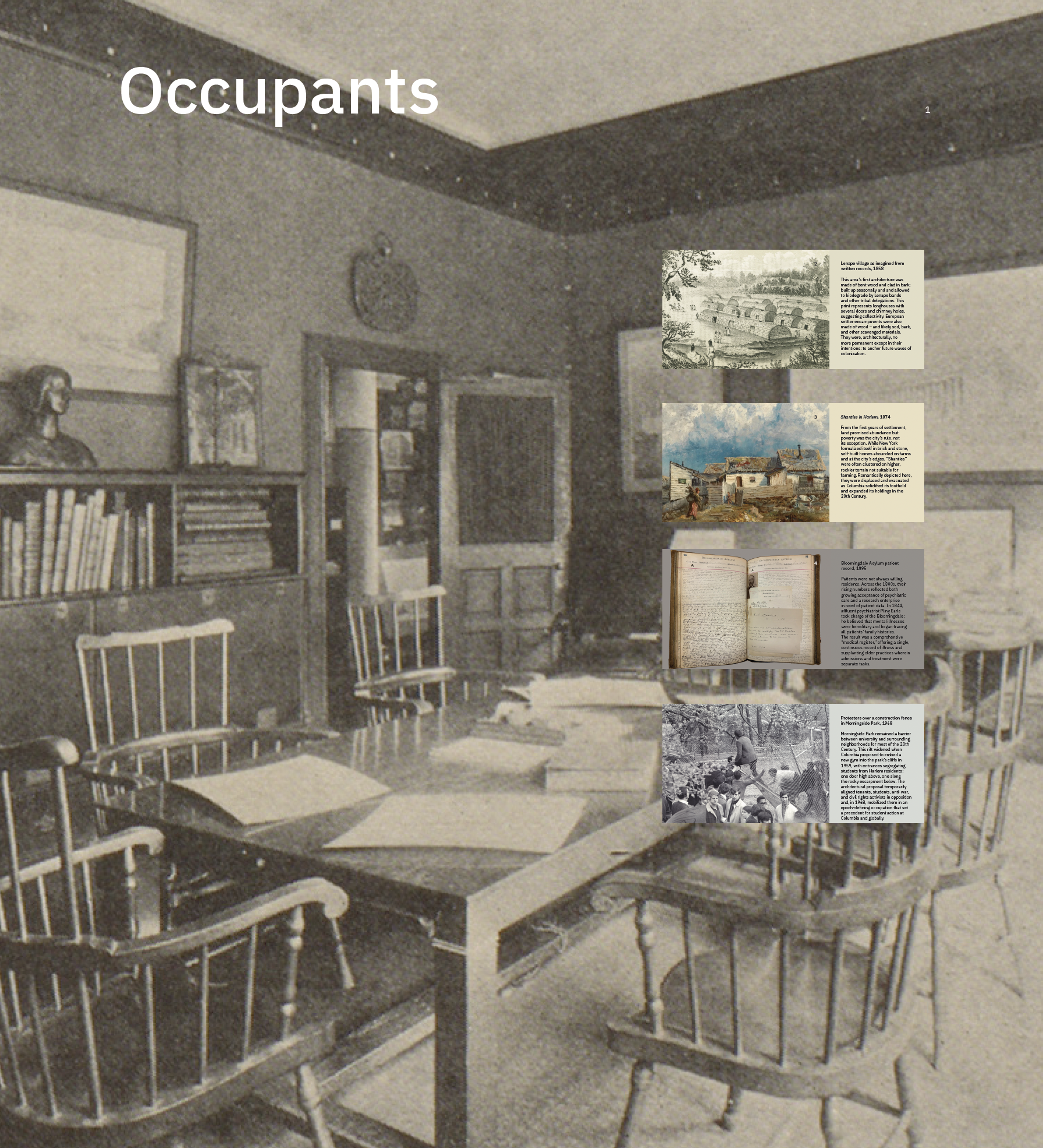
Photo of McKim, Mead & White architectural office at 61st St. in Everett Waid, “The Business Side of an Architect’s Office,” The Brickbuilder 22 no. 12 (December 1913)
Occupants
It may seem that Buell Hall has survived not by plan but by default. Yet, the building has consistently offered a useful post from which to overlook or manage the campus, first during its construction and later, for its operation. Its survival encourages us to pay attention to small stories of unintended but powerful uses of highly planned environments.
One of Buell Hall’s first university occupants was the campus’s architect himself, Charles McKim, who could be found sleeping in his makeshift construction site office. Formerly called the Macy Villa, he dubbed it “McKim Villa.” The architect claimed to have camped here for months, supported by a cook and several members of his architectural staff. The table pictured here held drawings of the university’s future campus as they received inky corrections in the firm’s office on 61st Street. With its inlaid pearl button (wired to the secretary next door) and four chairs, it was a standard of McKim, Mead & White’s studios. Today, one of these tables still sits on the building’s third floor, inside the Buell Center. After the architect vacated this small outlier building, it served as the university president’s office and numerous other purposes: as Alumni House, the men’s crew team clubhouse, the college dean’s office, an army recruitment center, the General Studies program office, and now, as a home for architectural research and the Maison Française.
A campus is more than an assemblage of buildings and lawns. The story of this one architectural survival invites us to look beyond the seeming uniformity of contemporary universities, which appear permanent in their smooth architecture, manicured grounds, and guarded entrances. Their occupants – students, faculty, staff, and visitors – may seem transitory by contrast, especially on urban campuses like Columbia’s, where movement is all around.
This exhibition’s research invites us to look for other historical survivances, including those that were not architecturally manifested, and those that persist in memory despite their eviction. Even temporary, fleeting uses of the campus as a platform to the wider world have set the course for generations seeking to redefine the role of knowledge in property and public life.
Lenape village as imagined from written records, 1858
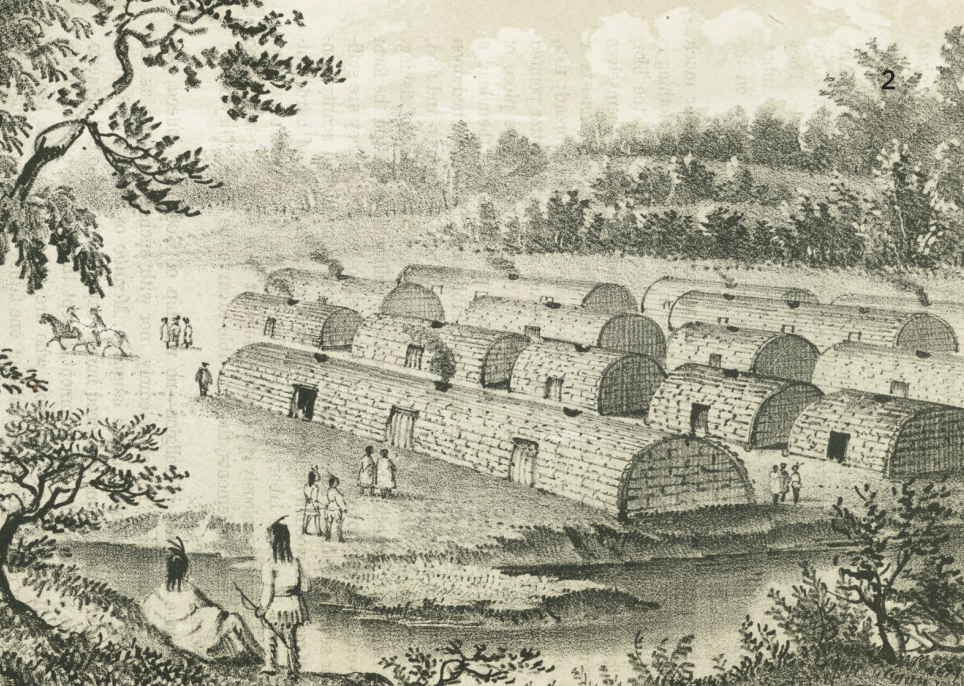
George Hayward, “An Indian Village of the Manhattans, prior to the occupation by the Dutch” in Valentine’s Manual (1858), NYC Municipal Library
This area’s first architecture was made of bent wood and clad in bark; built up seasonally and allowed to biodegrade by Lenape bands and other tribal delegations. This print represents longhouses with several doors and chimney holes, suggesting collectivity. European settler encampments were also made of wood – and likely sod, bark, and other scavenged materials. They were, architecturally, no more permanent except in their intentions: to anchor future waves of colonization.
Shanties in Harlem, 1874
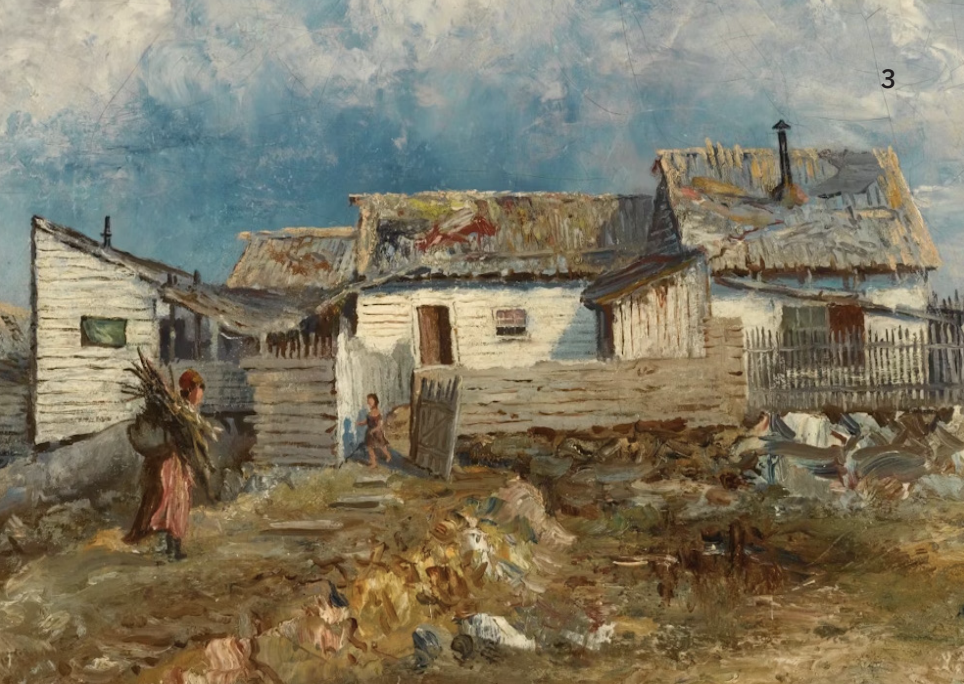
Ralph A. Blakelock, Shanties in Harlem (1874), Renwick Gallery, Smithsonian American Art Museum
From the first years of settlement, land promised abundance but poverty was the city’s rule, not its exception. While New York formalized itself in brick and stone, self-built homes abounded on farms and at the city’s edges. “Shanties” were often clustered on higher, rockier terrain not suitable for farming. Romantically depicted here, they were displaced and evacuated as Columbia solidified its foothold and expanded its holdings in the 20th Century.
Bloomingdale Asylum patient record, 1895
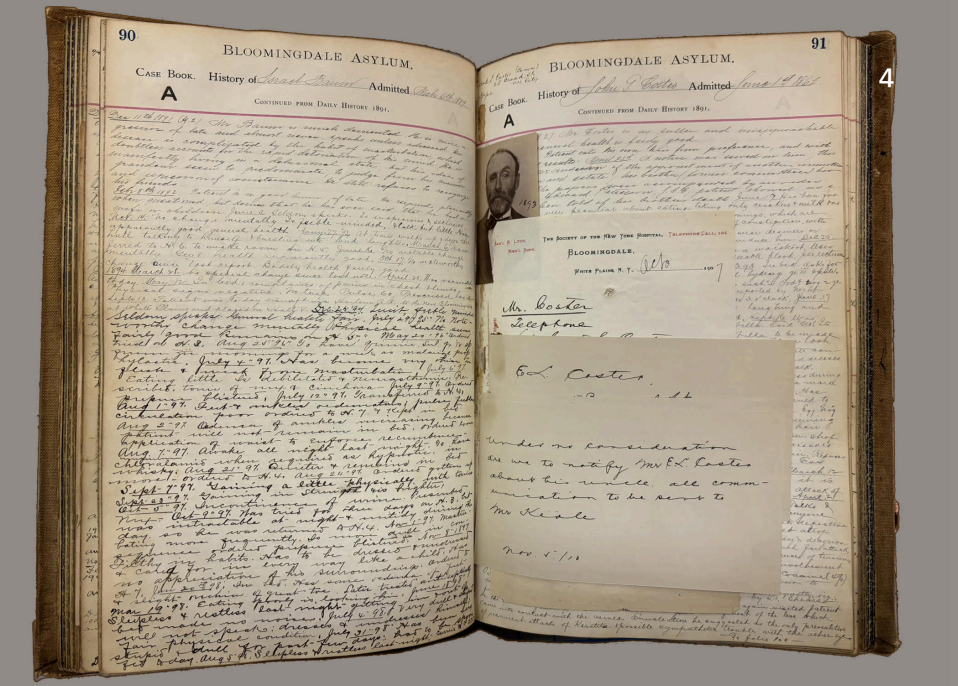
Bloomingdale Asylum patient record (1895), The New York Bloomingdale Insane Asylum Records 8, Columbia Rare Book and Manuscript Library
Asylum patients were not always willing residents. In the 1800s, their rising numbers reflected both growing acceptance of psychiatric care and a research enterprise in need of patient data. In 1844, affluent psychiatrist Pliny Earle took charge of the Bloomingdale; he believed that mental illnesses were hereditary and began tracing all patients’ family histories. The result was a comprehensive “medical register,” a single continuous record of illness that supplanted older practices wherein admissions and treatment had been separate tasks.
Morningside Park Protest, 1968
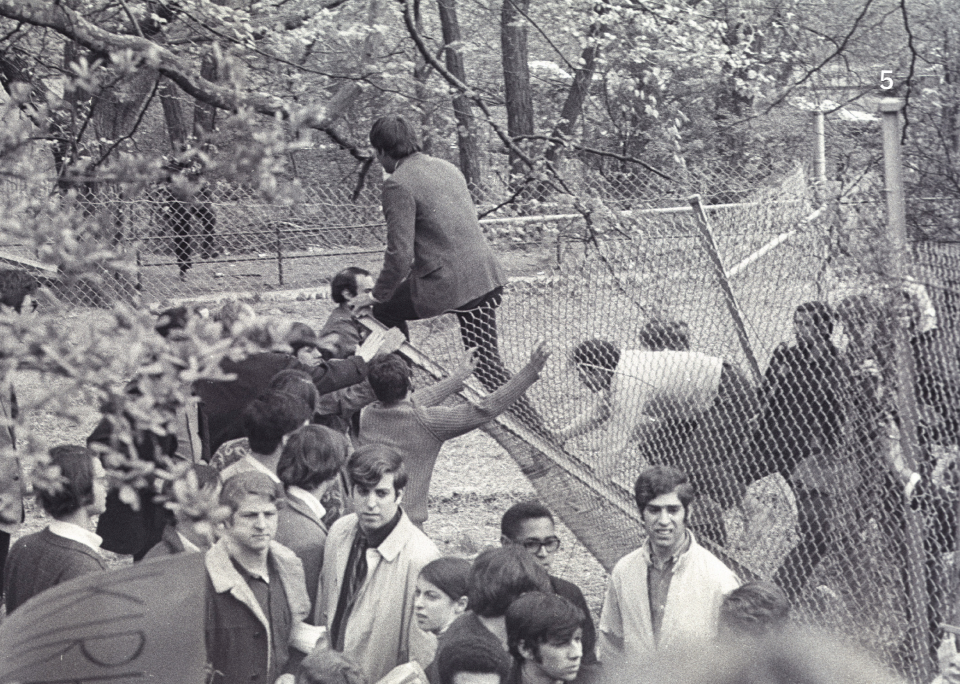
Protesters crossing construction fence in Morningside Park (1968), Columbia University Rare Book and Manuscript Library, image courtesy Steve Ditlea
The park remained a barrier between the university and Harlem. This rift widened when Columbia proposed to embed a new gym into the park’s cliffs in 1959, with entrances segregating students from Harlem residents: one door high above, one along the rocky escarpment below. The architectural proposal temporarily aligned tenants, students, anti-war and civil rights activists in opposition and, in 1968, mobilized them in an epoch-defining occupation, setting a global precedent for student action and solidarity.