Before you were here
A history of the campus’s land told from its oldest surviving building
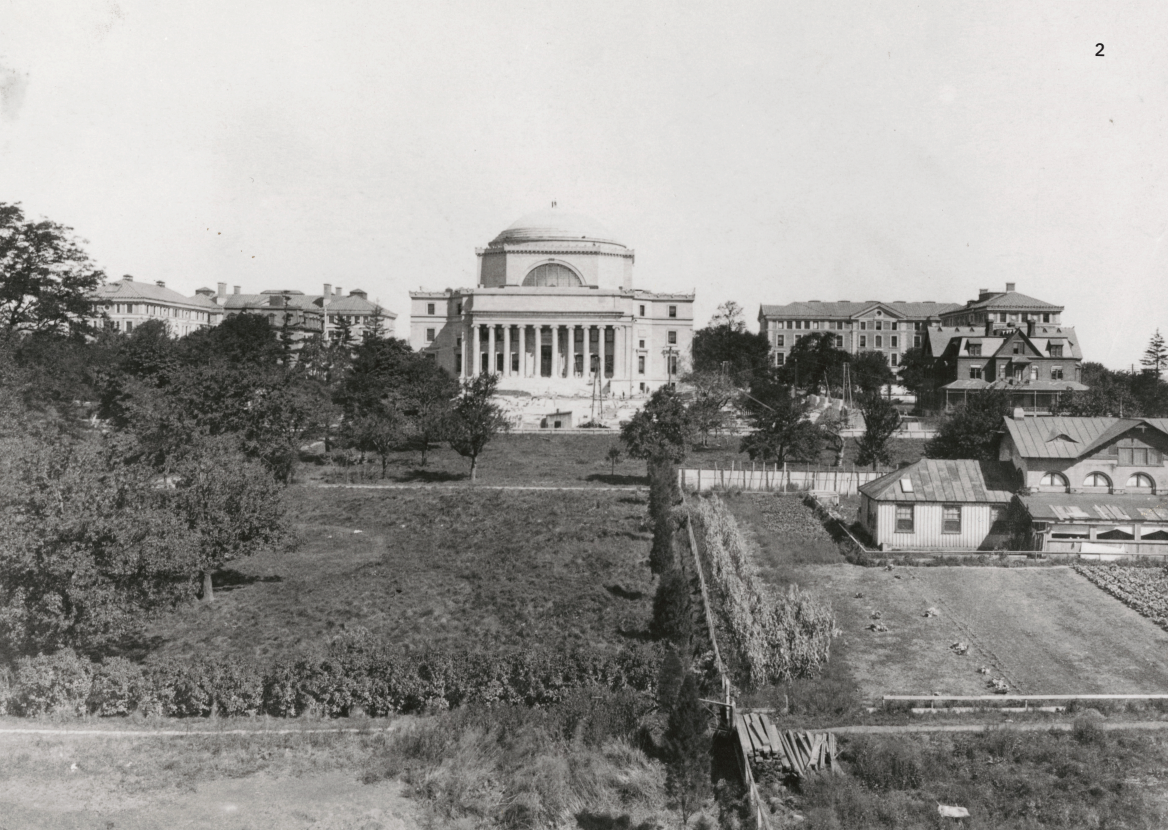
A campus, contrary to all appearances, is not a singular, bounded place. This exhibition offers an architectural history of Columbia’s campus’s land, as told from Buell Hall, its oldest surviving building. Predating the university’s arrival, this “villa” was built as an experimental pavilion for an “insane asylum” 140 years ago, at a moment when diseases were newly thought to be genetic and mental health worthy of dedicated hospitals. Research into this small building’s history – why it was built, how it was relocated, what changes in the land accompanied its survival – has uncovered a trove of lessons about architecture, bedrock, plants, and property, revealing a dynamic that extends far beyond the building’s modest footprint and the institution’s neat perimeter.
This deep history of land-shaping events is exhibited in eight vitrines. First and foremost, they cast doubt on the clichéd notion that campuses are “master-planned” once and remain complete forever. The vitrines proceed in roughly chronological order, but also revisit patterns and themes, exploring the inventive and sometimes forceful ways land and architecture are leveraged to suit changing human uses.
The story begins with Bedrock and its shaping of life above ground. Before any building, there are Signals of settlement or movement; this vitrine recognizes the power of a hilltop to call attention, beginning with Morningside Heights’ long Indigenous land tenure and on to a succession of new uses and names. Once institutions make formal plans to build, they advertise their relationships to nature and the city through architectural Imaginaries.
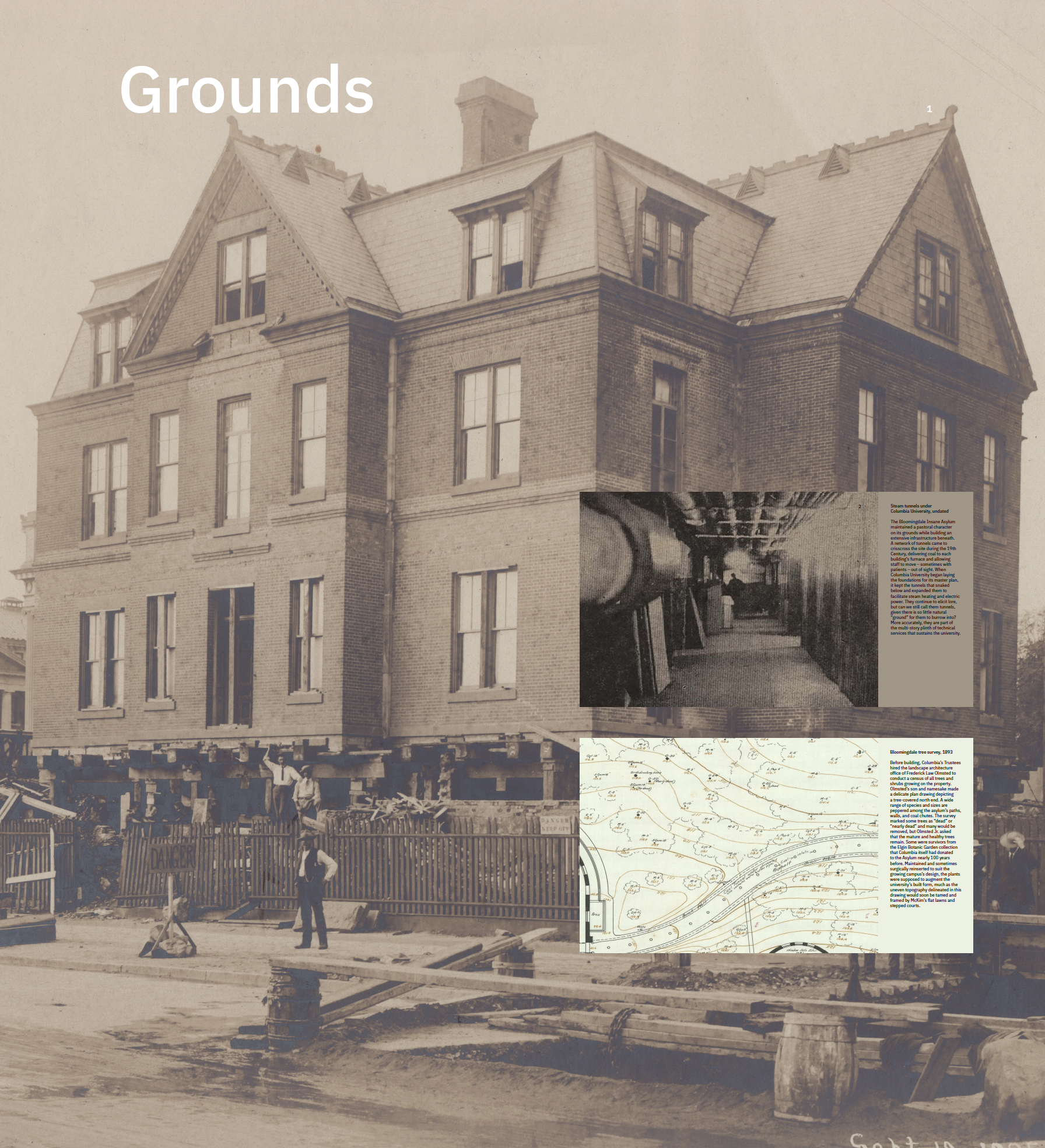
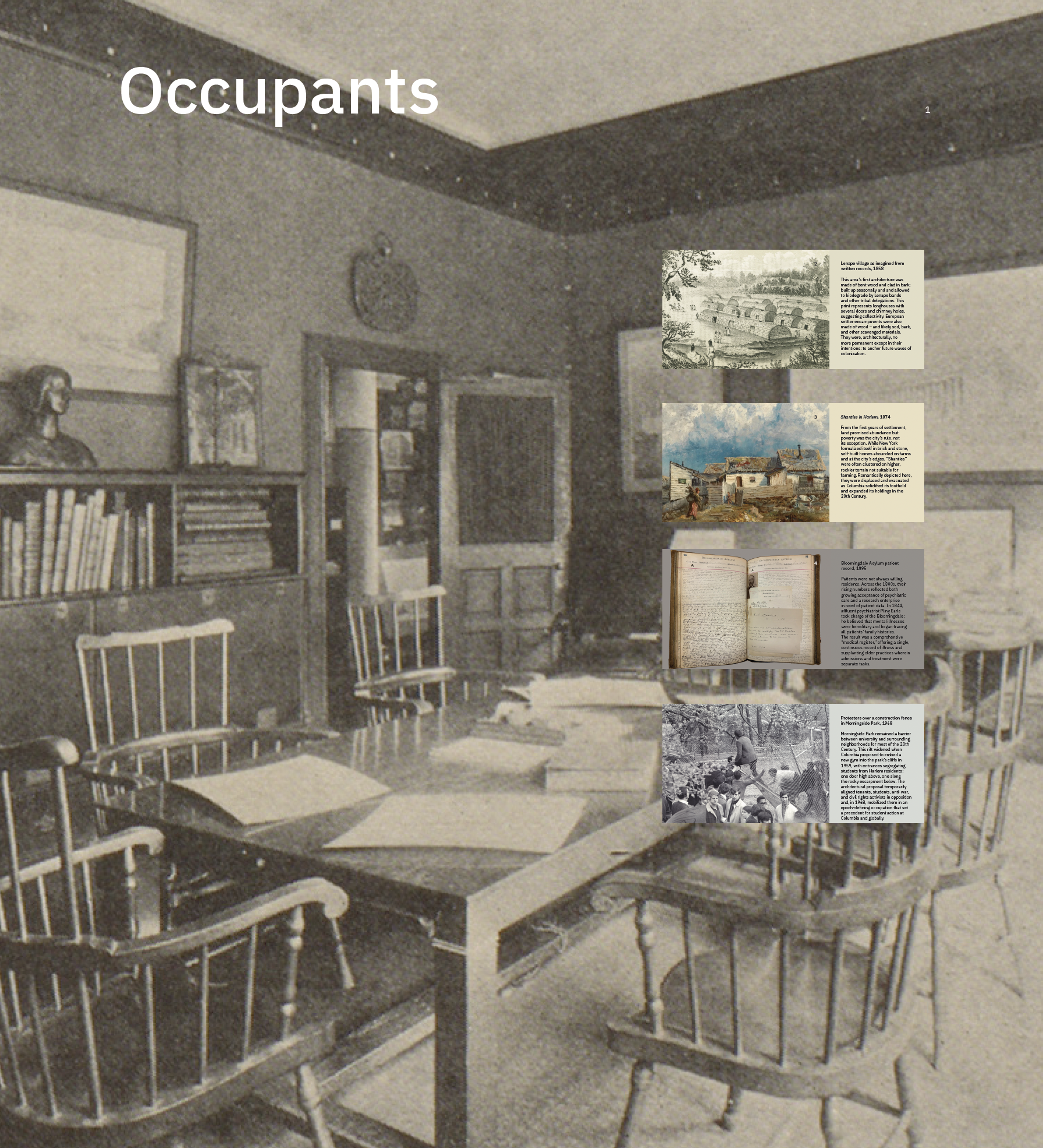
Holdings is the first vitrine to feature Columbia’s discrete ownership of this land. The school expanded over three centuries – from a single land grant to an international property portfolio – by marching northward from Lower Manhattan to Upstate New York and beyond. Experiments reflects on the medical and topographical innovations that have inflected institutional missions and identities here. In Grounds, we observe the technologies invented to pack forms of academic life tightly together, despite stubborn physical obstacles. Finally, in Occupants, we visit the gatherings foiled or enabled by buildings, often temporary but affecting the mood long after they depart.
This exhibition was conceived and curated over three years by student, staff, and faculty researchers at the Temple Hoyne Buell Center for the Study of American Architecture, currently housed in Buell Hall.
Credits
Buell Center: Lucia Allais, Director; Elsa MH Mäki, Assistant Director; Michelle Huynh Chu, Program Manager
Exhibition concept, research, design: Lucia Allais, Ultan Byrne, Andrew Chee, Michelle Huynh Chu, Omar Ismail, Spenser Krut, Elsa MH Mäki, Amora McConnell, Jacob Moore, Clarisse Figueiredo de Queiroz, Yara Saqfalhait, Jordan Steingard, Paula Volpato, Xueyuan Wang, Catherine Weilein, Stephen Zimmerer
Section drawings: Omar Ismail and team
Digital landscape model: Sonia Sobrino Ralston
Special thanks: Aleksandr Bierig, Kaoukab Chebaro, Andrew Dolkart, Marguerite Holloway, Maura Lucking, Bill Menke, Joanna Rios, Don Schlosser, Kendra Sykes, Mika Tal, Jocelyn Wilk, Avery Library, Rare Book and Manuscript Library, New York Botanical Garden
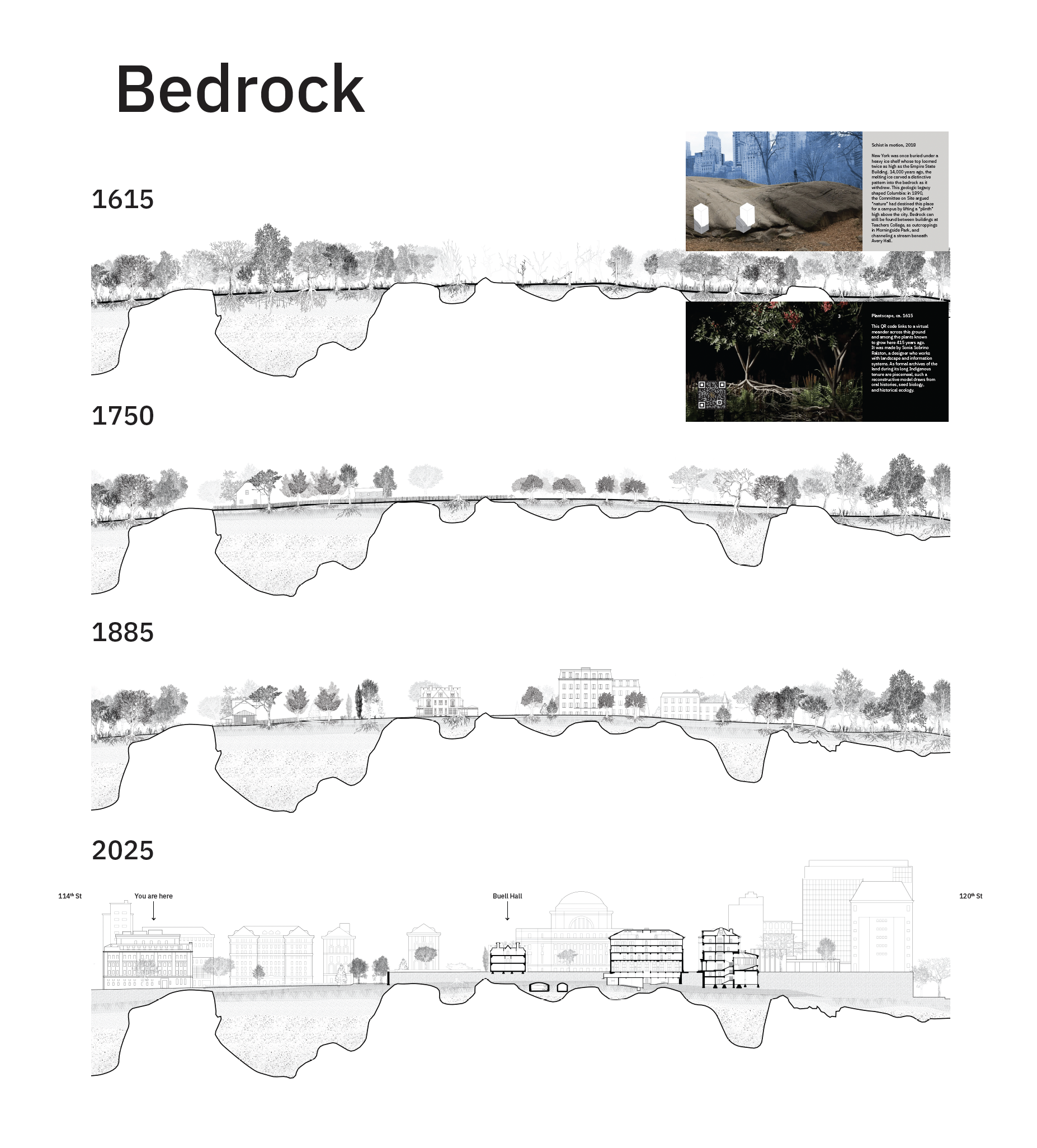
Until the mid-17th Century, the Lenape and neighboring Indigenous nations managed this land’s forests, marshes, tides, storm surges, and its plant and animal communities.
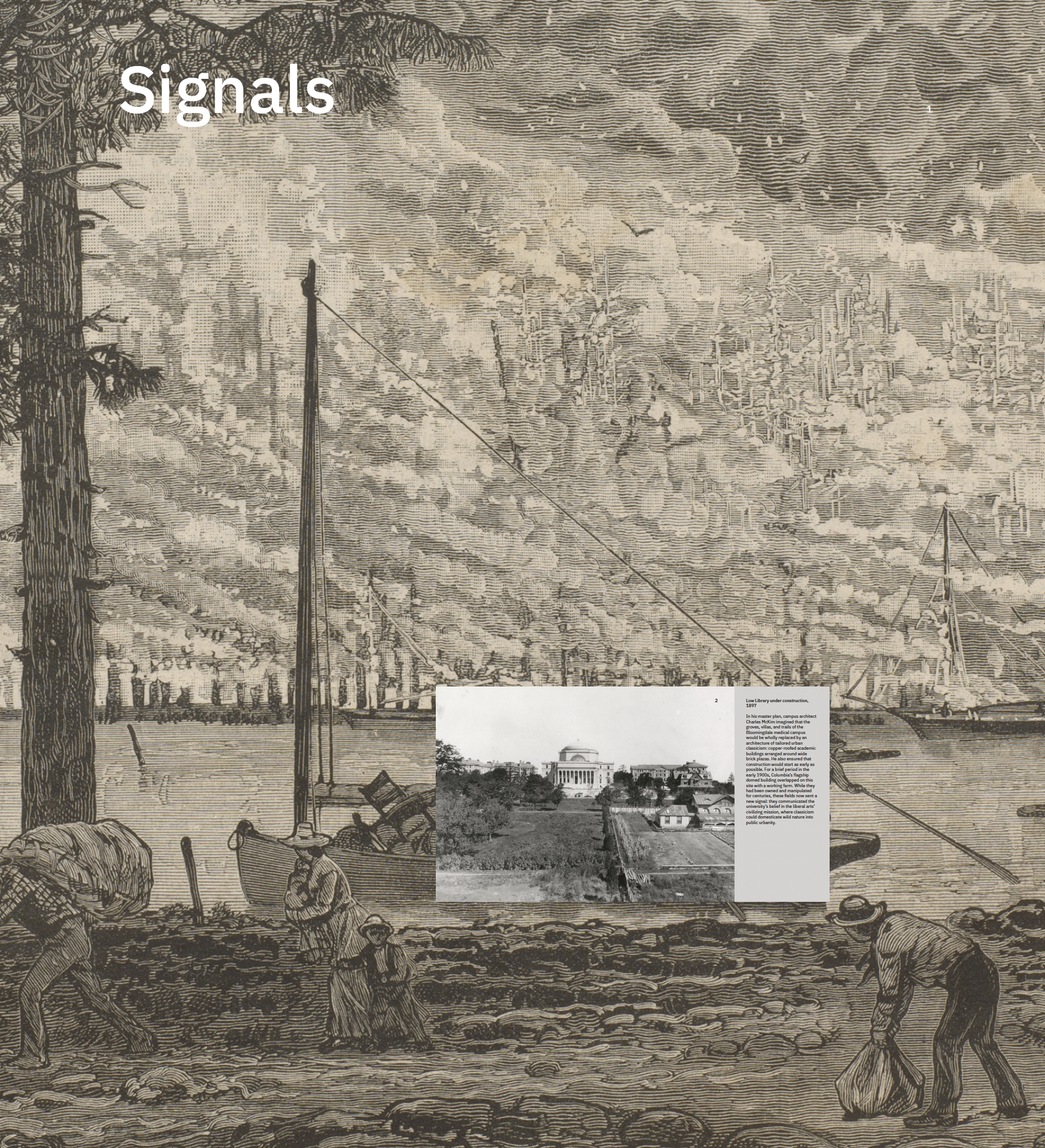
All modern building cultures are prefigured by messages, through which communities stake a claim to belonging. Manhattan is no different.
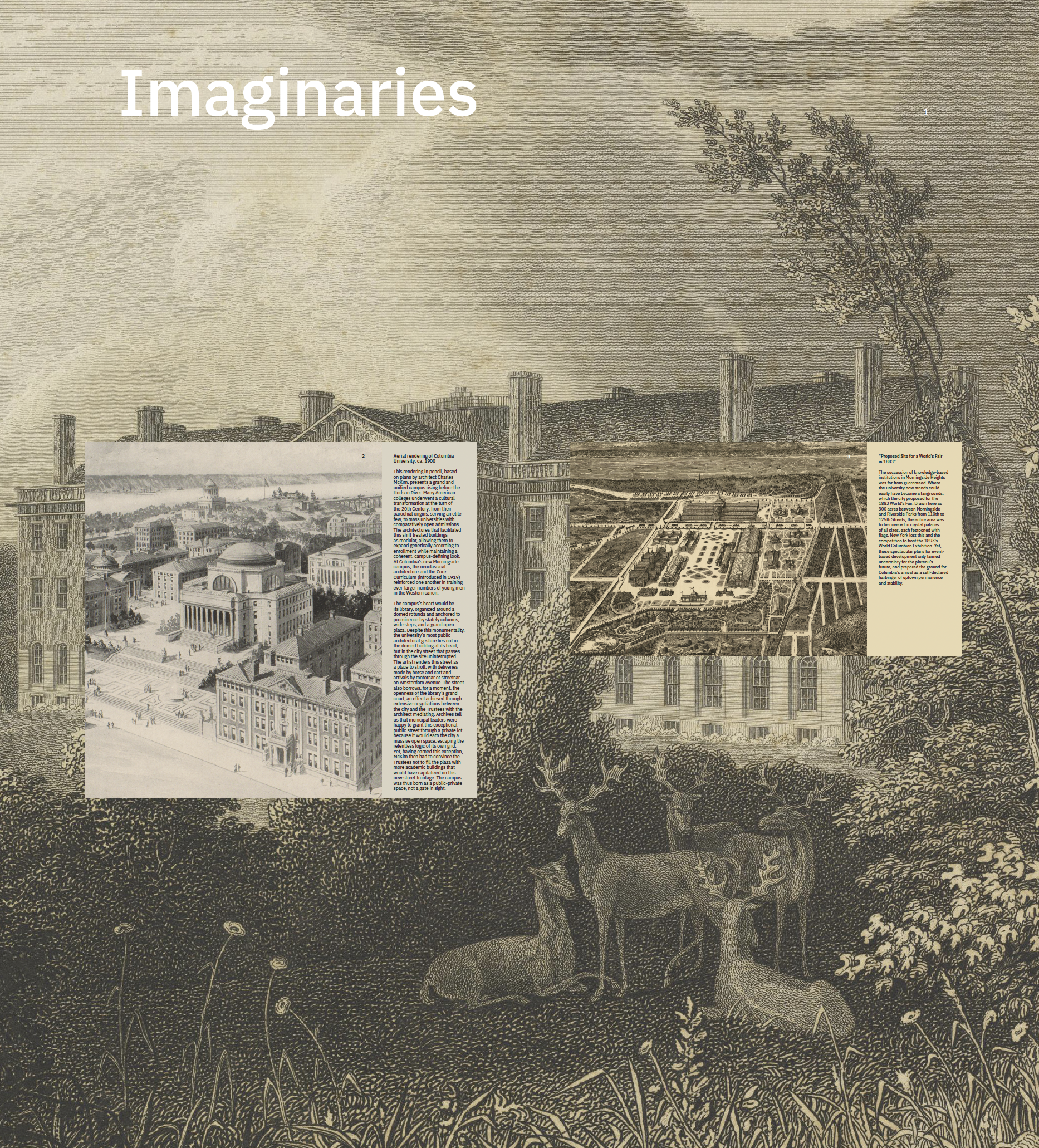
The first architecture designed to give this site a deliberate public image arrived in the early 19th Century.
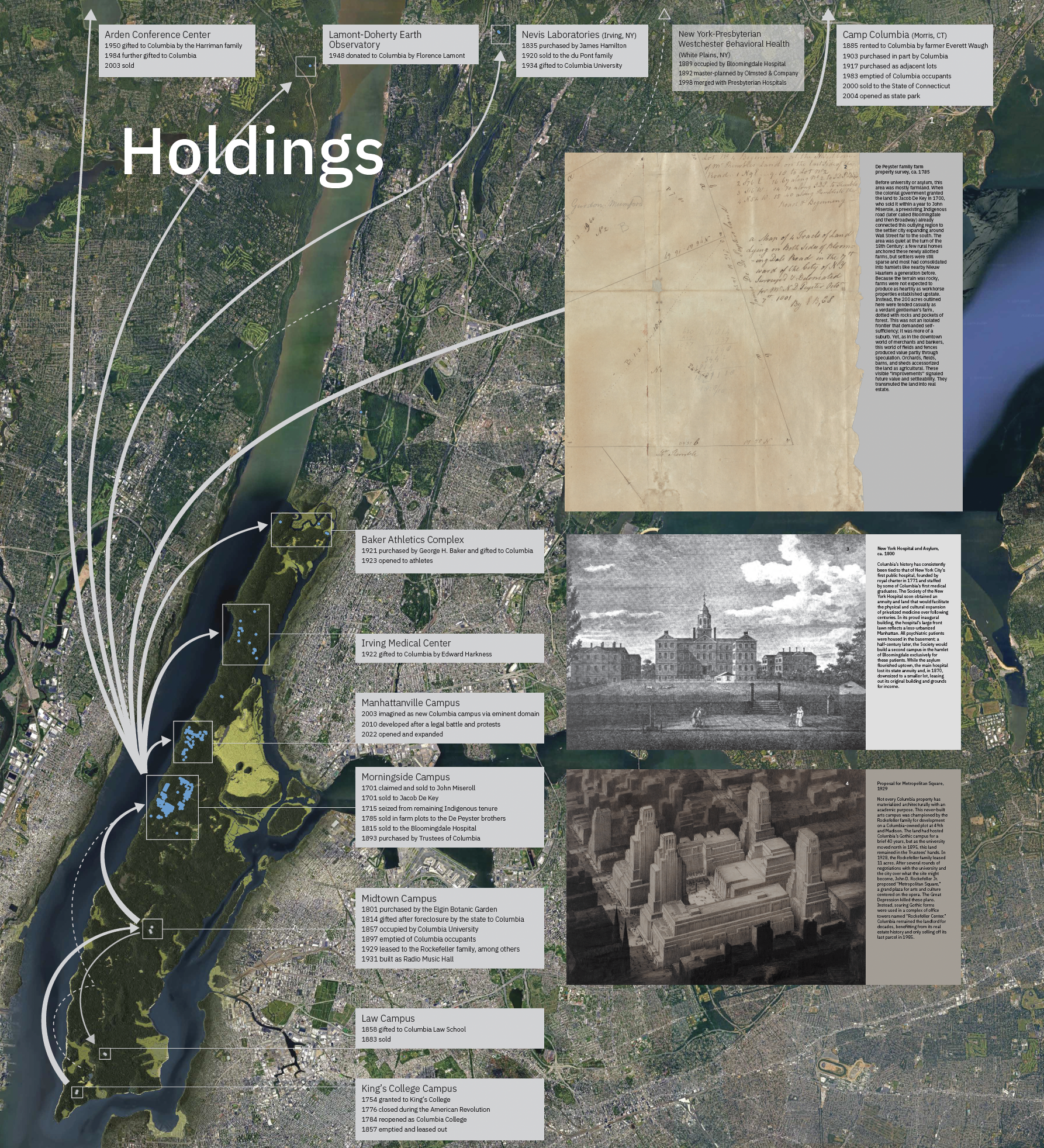
Since its 1754 founding as King’s College, teaching its first classes in the vestry of Trinity Church in Lower Manhattan, Columbia University has consistently moved its facilities northward.
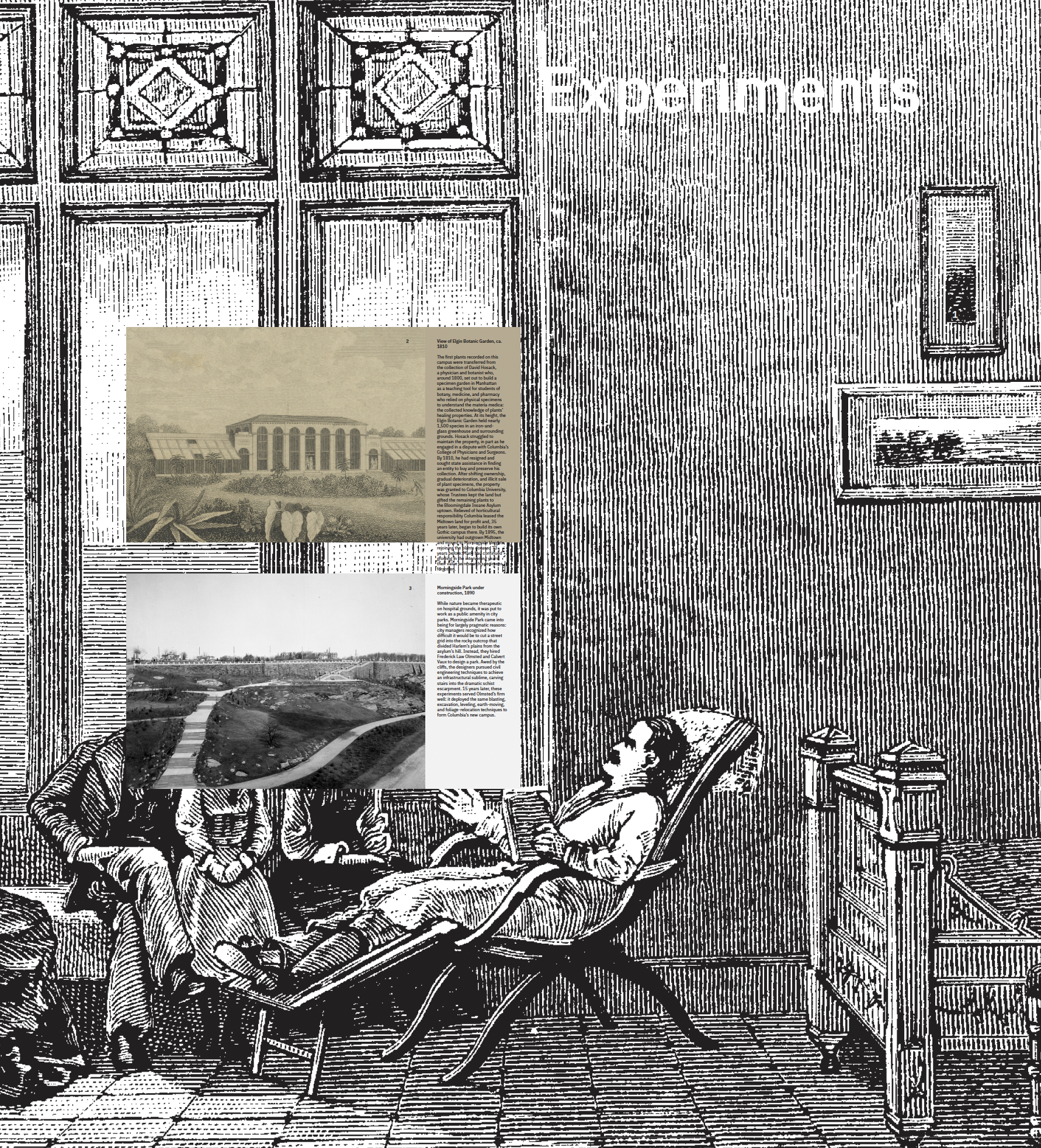
The last 150 years of this site’s history have been marked by an experimental attitude derived from the natural and social sciences. Its built experiments – often channeled through New York’s elite social circles – have defined the scale of the campus’s architectural experience and the tenor of its landscape.